
Claims Involving Elderly Drivers Under California’s Senior License Renewal Rules
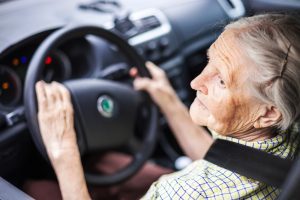 As drivers age, safety concerns can collide with legal responsibility after an accident caused by an elderly driver. California is one of many states that has implemented additional license renewal requirements for senior drivers. These safeguards reduce risk, but of course, they don’t completely eliminate the risk of age-related impairments that can cause car accidents. Passing renewal requirements does not protect an aging driver from claims of liability.
Unsure of your legal options after a car accident involving an elderly driver? Let’s talk. Call McNicholas & McNicholas now to set up a consultation.
California’s senior driver license renewal requirements explained
California has a list of renewal requirements for drivers aged 70 and older. These requirements include:
- Must renew their DL in person at the DMV every five years
- Must take a vision test
- May be required to pass a knowledge test if certain issues are flagged
- Must disclose medical conditions that may affect their ability to drive safely
- May have to go through reexamination if there are reported mental conditions, health conditions, or collisions and citations
These measures aim to ensure that aging drivers who are prone to conditions that affect driving ability can only drive when it is safe for them to do so. It’s important to note that this doesn’t catch all drivers who should no longer be licensed – a driver may pass all required tests and have a great driving record at one renewal, only to have their health worsen rapidly in the time between in-person renewals. A valid driver’s license is not protection against lawsuits and does not prove that a driver is safe to be on the road.
Common causes of accidents involving elderly drivers
While many aging drivers maintain their ability to drive well into their elderly years, certain issues commonly lead to collisions. They include:
- Slower reaction times, as they can affect a driver’s ability to brake quickly enough and avoid collisions by using evasive maneuvers
- Vision impairments, including difficulty seeing with glare, struggles with night driving, and a general lack of peripheral awareness
- Cognitive decline that often impacts judgment, memory, spatial reasoning, and decision-making abilities – all of which are crucial for safe driving
- Medication side effects, such as drowsiness, dizziness, and delayed response times
- Difficulty navigating complex traffic situations like left turns, roundabouts, and busy intersections
How do age-related medical conditions affect liability?
A California driver who continues driving despite knowing they have a medical condition that affects their ability to drive may be found negligent and liable for accidents. Additionally, even if a driver is not aware that their condition impacts their ability to drive, negligence may still come into play if it’s determined that they did not act reasonably when faced with a potential accident. Medical conditions are often relevant in these cases when there’s widespread medical knowledge of their ability to affect driving skills. Conditions that may be examined in claims include:
- Dementia or general cognitive impairments
- Diabetes
- Parkinson’s disease and other neurological disorders
- Serious vision disorders
- Conditions that affect an individual’s motor control
- Conditions affecting an individual’s alertness
If a medical condition causes or contributes to unsafe driving, it may support claims of negligence. Useful evidence in these scenarios includes medical records, physician testimony, and evaluations from medical experts.
Does holding a valid license protect an elderly driver from liability?
This is a common misconception. Holding a valid license does not protect an elderly driver from liability. All drivers in California owe the same duty of care to others on the road, no matter what their age is. When these cases go to court, juries look at:
- The driver’s conduct and actions prior to and during the crash
- If the driver breached their duty of care
- If their breach of duty led to bodily injury or property damage
A valid license can be a relevant piece of evidence, but it does not prove safe driving. When there’s evidence of unsafe driving, medical impairment, or general negligent behavior, a valid driver’s license doesn’t override that.
What if a family member knew a senior was unsafe to drive?
A family member who owns or controls a vehicle may be partially liable if they knowingly allow an unsafe elderly driver to use it. Negligent entrustment is a legal concept that’s relevant when someone lets an incompetent or reckless driver borrow their car and that driver goes on to cause an accident. Parties that may face potential liability include family members, caregivers, or close friends who give an unsafe elderly driver access to their vehicle.
Family members may claim that they could not deny their loved one access to a car because they had a valid license. However, they may still be liable if they knew, or should have known, that their loved one was incompetent or unfit to drive the vehicle.
Evidence commonly used in elderly driver accident claims
These types of claims can become fairly complex, due to the volume and types of evidence that can be useful in car accident claims involving senior drivers. Some of the evidence your car accident attorney may investigate includes:
- Medical and prescription records that may show deteriorating health or the use of medications that affect driving safety
- Driving history or recent collisions indicating a general inability to drive safely
- Witness statements describing erratic, unsafe, or unpredictable driving
- Family communications expressing safety concerns regarding a loved one’s ability to drive safely
- Expert testimony
This evidence doesn’t judge a driver based on their age; it judges their actions based on what a reasonable person would do and the driver’s ability to operate in a safe manner.
Injured by an elderly driver? Let’s talk
The team at McNicholas & McNicholas is here to help you pursue compensation after a serious California car accident. Schedule a consultation by contacting us online or calling today.
With more than 25 years’ experience as a trial lawyer, Partner Patrick McNicholas exclusively represents victims in personal injury, product liability, sexual assault and other consumer-oriented matters, such as civil rights, aviation disasters and class actions. Learn more about his professional background here.