
How Violations of California Vehicle Code Affect Truck Accident Liability
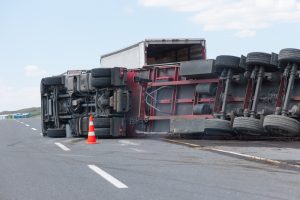 Commercial truck accidents often cause catastrophic damage, which is why so much effort has gone into figuring out why these collisions happen and how to prevent them in 2026. The California Vehicle Code addresses many of these concerns and safety risks, and so any observed violations may come into play when you start discussing your case with a truck accident lawyer.
Looking for the right attorney to handle your truck accident claim? Let’s talk—the team at McNicholas & McNicholas is committed to fighting for victims like you. Call us to get started now.
Understanding the role of the California Vehicle Code in truck accident cases
While the California Vehicle Code applies to all vehicles, commercial trucks are also subject to additional state and federal safety regulations due to their size and risk. Violations involving commercial trucks are often treated fairly seriously in personal injury claims, simply because of the greater risk taken by the driver and trucking company.
Vehicle Code requirements can play an important role in truck accident litigation. They may help establish:
- The legal duty owed by the truck driver
- Whether or not the truck driver violated the law and breached their duty
- How the violation contributed to the crash and the victim’s losses
It’s important to note that a violation on its own does not guarantee compensation. However, it can lay a strong foundation for proving liability.
Common California vehicle code violations in truck accidents
As you work with your truck accident attorney on your claim, a number of safety violations may come to light. Some of the most common include:
- Speeding and speeding-related violations: Speeding is one of the most common factors in all types of vehicle collisions, and truck accidents are no different. However, the fallout of speeding can be even worse for trucks, due to the dramatically longer stopping time they have at higher speeds. Drivers may be cited for driving above the speed limit or driving too fast for conditions.
- Unsafe lane changes and improper turns: Commercial trucks have large blind spots and need more space to maneuver. This means that drivers must be very careful when executing lane changes and turns. If a driver does not signal a lane change, merges at the wrong time or into another vehicle, or makes an illegal turn, they may be in violation of the California Vehicle Code.
- Improper braking or following too closely: Commercial trucks must maintain safe following distances appropriate for their size and load, as required by state and federal safety rules. Drivers who tailgate passenger vehicles, brake inappropriately when going downhill, or do not adjust their speed in heavy traffic may be cited.
- Size, weight, and load violations: The law is very strict regarding trucks’ sizes, weight limits, and cargo securement. An overweight truck, a truck with an improperly secured load, or a truck exceeding gross weight limits are commonly seen in collisions.
What is negligence per se in California?
Negligence per se is one way of demonstrating liability in California, used when someone violates a statute or regulation and causes injury to someone else in the process. California law allows a presumption of negligence when a statute is violated and all requirements of negligence per se are met. The injury must also be a result of something that the statute or regulation was meant to prevent.
How vehicle code violations are used as evidence of liability
Vehicle code violations can be used as evidence of liability when they result in citations, are included in police reports, or are implied in trucking records.
When a truck driver is cited as a result of a collision, the court and insurance companies may look at the nature of the citation and whether or not the citation had anything to do with how the accident occurred. As an example, imagine a truck driver who was speeding at the time of the collision. However, a manufacturing flaw in their truck caused the brake to lock up, so they could not stop in time to avoid hitting someone else. Because the accident was likely a result of the locked brake, rather than the speeding, the speeding citation doesn’t necessarily prove liability.
Accident reports often include officers’ observations, statements from involved drivers and passengers, and contributing factors in the crash. On their own, police reports don’t determine liability, but they can be useful in building your case.
Evidence outside the scene can also support your case. Driver logbooks, vehicle records, and electronic logging data can all highlight potential violations and their role in your collision.
Proving liability beyond the truck driver
While drivers may ultimately be responsible for acting within the law and driving safely, they aren’t always the only party at fault for an accident. Liability may extend to trucking companies that overload vehicles, impose unsafe schedules, or fail to properly train or supervise drivers. In these situations, fault may lie with the trucking company, the party responsible for loading and securing cargo, and companies responsible for inspecting and maintaining the truck.
Common misconceptions about traffic violations and truck accidents
As you pursue compensation, be careful to avoid these common misconceptions:
- A ticket automatically proves liability: A citation doesn’t necessarily prove liability. You must also be able to show that the citation was related to the cause of the accident.
- No ticket means no claim. A lack of citation doesn’t mean that there was no wrongdoing; it simply means the police officer did not have enough information (or time) at the scene to issue a citation.
- I also received a ticket and therefore don’t have a claim. Being partially at fault for a collision does not automatically mean you cannot pursue compensation. California is a pure comparative negligence state, so you may be able to recover compensation even if you are partially to blame. Your compensation is just reduced proportionate to your share of liability.
Take the first step in your case today
If you’ve been injured in a California truck accident, let’s explore your legal options now. Call McNicholas & McNicholas today or reach out online to get started.

With more than 25 years’ experience as a trial lawyer, Partner Patrick McNicholas exclusively represents victims in personal injury, product liability, sexual assault and other consumer-oriented matters, such as civil rights, aviation disasters and class actions. Learn more about his professional background here.