
How Dashcam Footage Can Strengthen Your Car Accident Claim in California
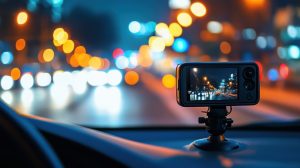 After a car accident in California, it is often one driver’s word against the other’s. Police reports are not always accurate, and witnesses may recall events differently. In these cases, dashcam footage can provide clear, real-time evidence of what happened, which can make your claim stronger.
If you were injured in a crash in California and had a dashcam, contact McNicholas & McNicholas, LLP. Our car accident lawyers may be able to use this evidence to strengthen your claim.
Why dashcam footage matters in car accident claims
Dashcam recordings can show what happens right before, during, and after a crash. They might capture a driver running a red light, making a dangerous lane change, tailgating, or texting while driving. Select dashcam models are also able to record vehicle speed, weather, road conditions, and what happens immediately after the crash.
Because this evidence is recorded as events unfold, it is very persuasive to insurance adjusters and juries. It replaces conflicting stories with a clearer, factual record.
What makes dashcam footage strong evidence
Not all dashcam footage is equally helpful. The usefulness depends on factors like the camera’s resolution, the camera angle, and whether it records details like timestamps and GPS locations.
Cameras equipped with higher resolution and wide-angle lenses may be able to capture more detail. Some models save footage automatically when they sense a sudden stop, which helps prevent important videos from being erased. Footage with clear timestamps and location data is stronger evidence because it can be independently verified.
What dashcam footage can prove
Dashcam recordings may support your car accident claim in several critical ways.
Fault and causation
The footage may show the at-fault driver’s specific negligent action, such as running a stop sign, swerving into your lane, or failing to yield.
Speed and behavior
Certain dashcam models log vehicle speed and GPS data, providing electronic evidence that can corroborate or refute claims about the speed at which each driver was operating their vehicle.
Hit-and-run identification
If the other driver flees the scene, the dashcam may capture their license plate number, vehicle make and model, or physical description of the vehicle and/or driver.
Insurance fraud detection
Staged accidents, sometimes referred to as “swoop and squat” schemes, are difficult to prove without video evidence. A dashcam can document exactly what occurred.
Severity of impact
The footage can demonstrate the force of the collision, helping to connect the crash to the injuries claimed.
Is dashcam footage admissible in California courts?
Yes, dashcam footage is usually allowed in California civil courts if it meets basic evidentiary rules. Generally, the footage must be relevant, real, unaltered, and collected according to California law. Courts treat dashcam videos like other types of private security recordings.
To use the footage, someone (often the vehicle owner or installer) must authenticate the recording by confirming that it accurately represents what it claims to show and that it has not been materially altered. Unedited footage with clear timestamps and GPS data is the most convincing. A car accident lawyer can help ensure your footage is preserved and presented correctly in court.
California’s privacy and consent rules for dashcam recordings
Dashcams are legal in California, but there are specific rules regarding their placement in a vehicle. According to California Vehicle Code § 26708, a dashcam on the windshield must be in a 7-inch square on the lower passenger side, a 5-inch square on the lower driver side, “or in a five-inch square mounted to the center uppermost portion of the interior of the windshield.” Many drivers also put cameras on the dashboard or behind the rearview mirror to keep their view clear.
Privacy rules regarding audio recordings are a bit more complicated. California generally requires consent from all parties before recording a confidential conversation under Penal Code § 632. However, recordings may be permitted when there is no reasonable expectation of privacy. If your dashcam records sounds inside the car, you need to inform all passengers and obtain their consent. Recording videos of public roads is normally allowed because the public generally does not have an expectation of privacy on a public road. If your dashcam records audio, let your passengers know. Commercial and rideshare drivers should also post a sign in their vehicle. In the case of a device that records audio, California law requires posting a visible notice informing passengers that their conversations may be recorded.
How dashcam footage affects insurance negotiations
Insurance companies often dispute liability and seek to limit compensation to injured parties. If you have a clear video showing the other driver’s mistake, adjusters will be more inclined to reach a fair settlement rather than risk an adverse outcome at trial. Even so, not all insurance companies treat dashcam footage the same.
Some insurers may attempt to downplay the video’s importance. A skilled car accident lawyer is knowledgeable in using footage to your strategic advantage and responding to any efforts to reduce its value.
When dashcam footage can work against you
Keep in mind that dashcam evidence can also be used against you. If the video shows you speeding, distracted, or breaking traffic laws, it could prove you were partly at fault.
In California, your compensation is reduced by your share of fault. Also, once dashcam footage is part of a legal case, the other side can ask to see it. Even videos that do not show the crash directly might have information the other party could use. As such, you should review all dashcam footage with your lawyer before sharing it.
Best practices for preserving dashcam footage
If you are involved in a car crash, you should take the following steps in order to protect the evidence:
- Save the footage immediately to a separate device (e.g., a computer, an external hard drive, or a mobile phone). Many dashcams overwrite old recordings on a loop, so acting quickly is a must.
- Do not edit or alter the recording in any way. Even well-intentioned edits can raise authenticity concerns in court.
- Create backup copies and store them in separate locations to help protect against accidental deletion, device failure, or data corruption.
- Provide the footage to your attorney before sharing it with anyone else.
Protecting your rights after an accident
Dashcam footage can be a very strong piece of evidence in a car accident case, but it needs to be saved, reviewed, and used correctly. Working with an experienced car accident lawyer can help ensure the footage strengthens your claim rather than harming it.
If you were hurt in a California car accident, please contact us today to discuss your case and find out how we can help you get fair compensation. At McNicholas & McNicholas, LLP, our attorneys have extensive experience analyzing dashcam footage to develop the strongest possible claims.

As one of the leading trial lawyers in California, Partner Matthew McNicholas represents victims in a range of areas, including personal injury, wrongful death, employment law, product liability, sexual assault and other consumer-oriented matters. Learn more about his professional background here.