
Understanding Liability for Autonomous Vehicle Accidents in California
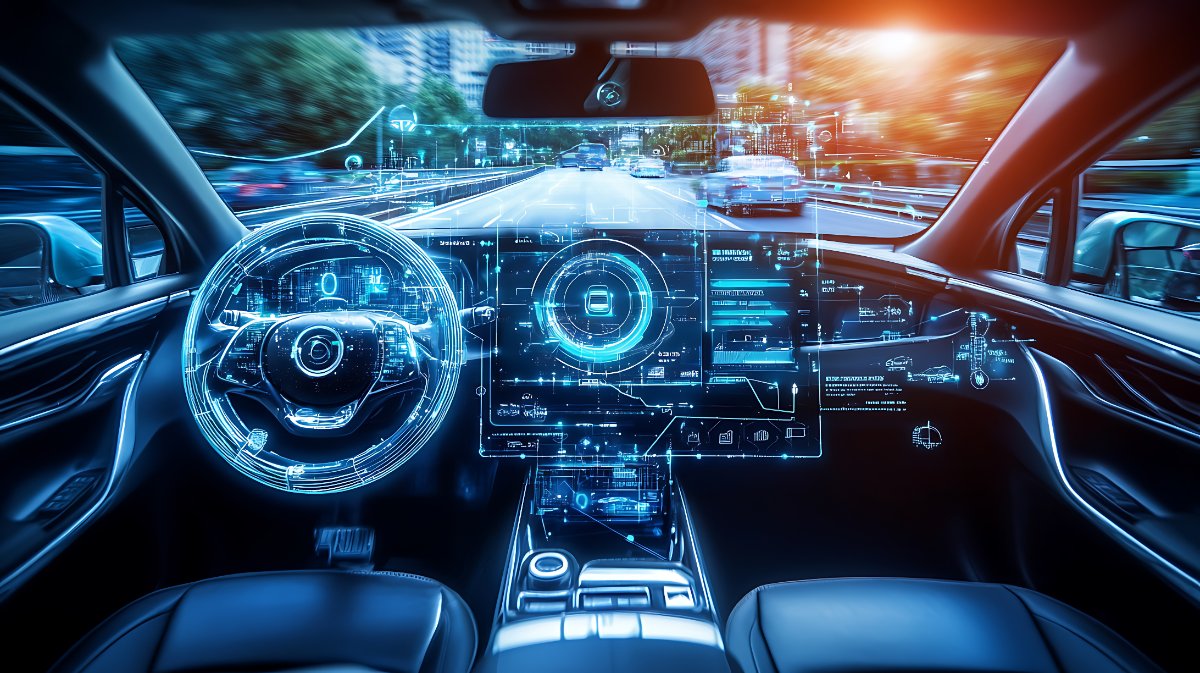 Autonomous vehicles are increasingly common on California roads, and they are involved in a surprising number of collisions. Depending on the details of an accident, liability may lie with a human operator, vehicle manufacturer, software developer, or another driver. Liability can be more complex in cases involving self-driving vehicles, but victims still have options when it comes to seeking compensation.
Our team is here to help. If you have been involved in a crash with a self-driving vehicle and you are not sure where to turn, let’s talk about your options and next steps. Call us to get started.
Defining autonomous vehicles in California
Autonomous vehicles are regulated by the Autonomous Vehicles branch of the California DMV. They require reports on when vehicles disengage, how often vehicles are involved in collisions, and when other safety issues arise.
Autonomous vehicles are typically broken down into levels that are defined by SAE International and adopted by the NHTSA:
- Level 0 – Momentary Driver Assistance: Driver is fully responsible for driving while the vehicle system provides momentary driving assistance, such as warnings or alerts.
- Level 1 – Driver Assistance: Driver is fully responsible for driving while the vehicle system provides continuous assistance with acceleration and braking or steering.
- Level 2 – Additional Driver Assistance: Driver is fully responsible for driving while the vehicle system provides continuous assistance with acceleration, braking, and steering.
- Level 3 – Conditional Automation: The system completely takes over driving, but the driver remains available to take over if the system cannot operate.
- Level 4 – High Automation: Human driver is not needed, and the vehicle can operate in limited service areas.
- Level 5 – Full Automation: Human driver is not needed, and the vehicle can operate on all roadways.
While these levels describe increasing degrees of driving automation, California generally treats autonomous vehicles as vehicles operating at Level 3 or above.
How is liability determined after an Autonomous Vehicle accident?
California is a fault-based state when it comes to car accidents, so the party responsible for causing a crash is also responsible for covering any damages that arise as a result. But in autonomous vehicle cases, the question is: was the crash caused by human error, system failure, or both?
A number of legal theories come into play. Negligence may apply if one or more parties failed to act reasonably to ensure the safety of others. Product liability may be applicable if there were defects in the vehicle itself or in its specific components. Comparative fault may split liability among multiple parties.
The investigation regarding liability often begins with the accident report. Manufacturers testing autonomous vehicles in California must report crashes within 10 days of the incident if the crash causes property damage, bodily injury, or death. They must submit Form OL 316, Report of Traffic Collision Involving an Autonomous Vehicle.
Because this report includes specific information on damaged vehicle components, manufacturer information, weather conditions, movement preceding the collision, roadway conditions, and the type of collision, it can go a long way in starting to establish liability.
When different parties may be liable
There are many potential liable parties in an autonomous vehicle collision. We will break down when different parties may be responsible for a crash:
- Human driver or operator: At several levels of autonomous driving, a human driver is still ultimately responsible for monitoring the system and ensuring that it is working properly. They are legally obligated to intervene when the system fails or does not take steps to avoid a collision. A driver may be responsible if they do not pay attention when using autonomous features, misuse the system, ignore warnings or alerts from the vehicle, or take their hands off the wheel when the system requires them to stay engaged.
- Vehicle manufacturer: In some cases, it does not matter how careful a human driver or operator is – the vehicle itself is unsafe. California law allows accident victims to seek compensation from companies that produce defective products. A system may be unsafe due to its design, due to improper manufacturing, or due to inadequate instructions or warnings. Since California is a strict liability state for product liability cases, injured people do not have to prove that the company was negligent. They just have to prove that there was a defect and that it caused harm.
- Software developers or tech companies: Many autonomous vehicles run on heavily specialized software, sensors, and artificial intelligence. If any of these elements fail in a way that leads to a collision, the company that handles the tech may be liable. Examples include coding errors, software malfunctions, faulty algorithms, or inadequate testing.
- Other drivers: An autonomous vehicle is not always to blame when a crash happens. The other driver may also be liable. For example, a human driver may rear-end an autonomous vehicle, cause a multi-vehicle collision that an AV cannot avoid, or fail to yield. Autonomous vehicles cannot avoid every potential collision, but in these cases, liability may lie with the other driver.
Insurance issues in autonomous vehicle accidents
Insurance claims involving autonomous vehicles can be incredibly confusing for drivers, especially if you are unfamiliar with the rapid changes that have happened in recent years. Consider someone who has never driven an autonomous vehicle crashing into a Waymo and finding no driver behind the wheel. California law does require AV manufacturers, and vehicle owners under ordinary vehicle insurance rules, to carry insurance or prove financial responsibility. Claims may involve both personal auto insurance policies and corporate insurance policies, depending on the level of autonomous driving and whether or not the vehicle had a human operator.
When there are multiple insurance companies involved, it is not uncommon for them to fight over who is liable. This is where it is helpful to have a car accident attorney who can get to the heart of the matter and demand compensation from all liable parties.
Important evidence in AV accident claims
The same forms of evidence you would look for in any car accident are still useful in AV accidents. However, these accidents have additional types of evidence that can provide insight into what happened. The vehicle’s black box may indicate what went wrong in the system to lead to the crash. Camera and sensor recordings may highlight whether or not the system failed prior to a collision. Your car accident attorney may also look at software performance, update history, and California crash reports for the same model of AV.
Hit by an autonomous vehicle? Call us today
The team at McNicholas & McNicholas, LLP is here to help you with your car accident claim – no matter how complicated it may seem from the outside. Let’s discuss what happened and your next steps. Reach out online or call us now.
As one of the leading trial lawyers in California, Partner Matthew McNicholas represents victims in a range of areas, including personal injury, wrongful death, employment law, product liability, sexual assault and other consumer-oriented matters. Learn more about his professional background here.